
The Promise

The promise exists to support the transformation of how Scotland cares for its children, their families and care experienced adults. At its heart, this transformation must be built on what they tell us matters most to them.
We are following Plan 24 30 and the actions from the Independent Care Review within the five foundations of the promise and the 25 national promise route maps.
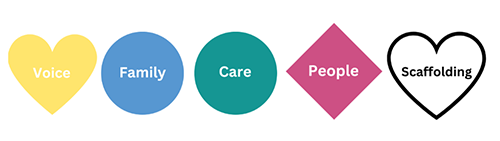
As we outline in our corporate plan 2026 -2031, we want babies, children, young people, their families and care experienced adults to:
experience high quality, trauma-informed, compassionate care and support
have improved holistic outcomes (enabled by the services which support them)
feel that their voices are heard in decision making about them and that their rights have been protected, respected and realised.
As Corporate Parents, we are aligning our current and future organisational activity with the messages of the promise in how we regulate to support babies, children and young people on the edges of care and with care experience. This includes our work in the areas of participation, equalities and implementation of the United Nations Convention on the Rights of the Child (UNCRC). In applying national best practice and upholding the Health and Social Care standards we are keeping the promise.
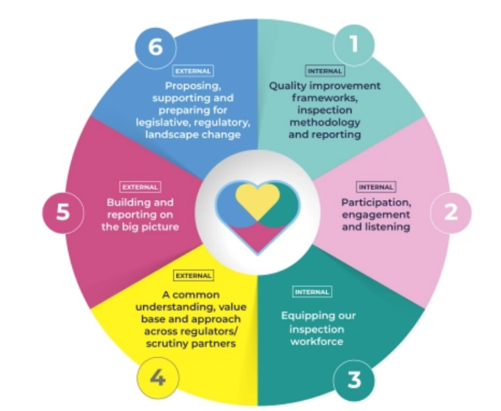
Our promise work sits across six workstreams (three internally facing and three externally facing). This is helping each of us working on behalf of children and care experienced adults to reflect and act, individually and collectively on ‘What does the promise mean for me in my role in the Care Inspectorate?’
Internally we are applying promise thinking across our methodology, involvement and learning and development activities.
Externally we are working to ensure that we contribute to the evidence and influence needed to enable national transformational change. We do this through the lens of our scrutiny and assurance role and in collaboration with other scrutiny bodies and partners.
For more information on #Keepingthepromise at the Care Inspectorate please contact:
- Aileen Nicol, Children’s strategic inspector and promise lead
- aileen.nicol@careinspectorate.gov.scot

The promise in practice blogs
In late 2024, Imagine Care opened their new house, Lochend. Lochend was created to provide two young people with additional support needs with a safe, loving and permanent home.
Lochend has been committed to keeping the promise, with the importance of family relationships highlighted during their Promise Assurance Inspection in August 2026.
Diane Cafferky, registered manager at Lochend, said: “At Lochend we are a family, and we want to ensure that does not just include the adults and young people but everyone that is important to the young people.”
Prior to a young person moving into Lochend, their parents were fully involved in the transition period. This included visiting the house and offering adaptations and ideas to help make Lochend feel like their home.
Throughout these discussions, the team became aware of the young person’s extended family, including two sets of grandparents, a younger sibling and previous care workers who had maintained a continued connection with the young person’s parents because of their love for them.
However, the team were also informed that these connections had stopped, although the reasoning for this was never fully understood.
Diane said: “From listening to the young person’s parents, their extended family was very important, with the family connections being full of love and fun, and I felt sad that these were not being promoted. As a team, we understood the importance of their family and promised to ensure these connections were promoted.”
Sammi Carmichael, assistant manager, said: “After a period of the young person settling into Lochend, we spoke with the parents and looked at introducing their grandad back into their life.”
Diane reflected that the meeting was emotional for both the young person and their grandad, but the love, fun and trust were there immediately.
“It was one of the highlights of working with the young person and the family.”
From there, the relationship went from strength to strength. All of the young person’s grandparents came to visit in their home, and they were able to share magical moments together, including activities such as going to the park and swimming.
Reintroducing the young person’s sibling was going to be more difficult due to their individual needs. However, with the full support of the Lochend team and the young person’s parents, this has also proven successful. The whole family has been able to enjoy activities together – something that had not happened for many years.
Diane went on to explain that, following the success of widening the young person’s world through her family connections, it was time to also allow the people who had cared for them previously to become part of her world again. This meant that the adults who had cared for them in a previous service were able to visit.
Sammi explained that a social story was used to show the young person photographs and explain the planned visit. The young person appeared to understand this and used words to indicate that they remembered the adults.
The visit went well, and the young person now has not only her family around her but also her friends and the people who have played an important role in her life.
Diane explained that the young person’s family often verbally give very positive feedback to the team at Lochend. However, during the recent Promise Assurance Inspection, they also shared further feedback about the difference that family engagement has made to their child and to them as a family.
The family shared: “Our child has so many positive experiences at Lochend but I think the most positive is how open they are to family engagement. Our child has many visits a week from us and their grandparents. They also have visits from their friends (previous carers) from a previous service. Lochend has ensured our child has a rich family life that former services restricted. They are now a much happier person for it and we as a family are delighted. All of our child’s visitors have a great relationship with all the staff and it feels like one big team working towards their best interests and making sure they meet their potential.”
The impact of this work was perhaps captured most powerfully in the words of the young person’s family: “You gave me my child back.”
Diane concluded: “This journey has shown Lochend the importance of listening to the people who know the young people best – their family. If we hadn’t listened to their voices and their advocacy, their world could have remained very small.
“Now the young person has their family around them. Their grandparents, siblings, friends and the people who cared for them previously. As their parents said, we are all ‘one big team’.”
For Lochend, this experience has reinforced that family relationships are not an addition to care – they are an essential part of a young person’s identity, belonging and wellbeing.
By listening to families, being open to possibilities and supporting relationships to grow, the young person’s world has become bigger, richer and more connected.
This is what keeping ‘the promise’ means at Lochend: ensuring that the people who matter most to a young person remain part of their life, their home and their future.
In April 2026, we inspected Netherton in East Ayrshire, a care home service for children and young people, operated by Spark of Genius. We graded this service as excellent, as we found performance which supports experiences and outcomes for people which are of outstandingly high quality. There is a demonstrable track record of innovative, very high quality performance across a wide range of their activities and from which others could learn. We were impressed with the organisation’s developments and commitment to Scotland’s promise, ensuring young people being cared for by Netherton, East Ayrshire, could grow up feeling loved, safe and respected.
Blog by Stacey Galloway, residential manager at Netherton: Netherton - more than a house, a home
At Netherton, we strive to create far more than simply a residential childcare setting, we create a loving, nurturing family home where children and young people feel safe, respected and genuinely cared for. Everything we do is centred around the needs, voices and lived experiences of our young people, ensuring they feel a sense of belonging, warmth and stability in every aspect of daily life. Guided by the values of The Promise Scotland, children’s rights, trauma-informed practice and the principles of GIRFEC, our staff team continuously reflects on how we can provide the highest standard of care while ensuring young people remain at the centre of every decision made within the home.
At Netherton, relationships are at the heart of everything we do. Our staff team recognises the importance of being caring, consistent adults who help shape and guide young people’s lives through love, nurture and trust. We understand that creating feelings of safety and security comes from the small everyday moments just as much as the bigger achievements. Whether this is supporting a young person after a difficult day, celebrating successes, sharing meals together or simply spending quality time together as a family, we aim to create an environment where children feel emotionally safe, listened to and valued.
A key focus for our team has been reducing the stigma often associated with being in care. Our young people have shared how important it is for them to feel like individuals rather than being defined by their experiences, and this has shaped the culture within Netherton. We have worked hard to ensure that language, approaches and relationships are nurturing, compassionate and empowering. Staff understand that meaningful relationships and consistent care can have a lasting impact on a young person’s confidence, wellbeing and future.
One example of this has been the redesign of our risk assessments into “Keeping Me Safe” plans, developed collaboratively with young people. Rather than professionals identifying concerns for them, young people are encouraged to share what matters to them, identify areas they would like support with and contribute to the language used throughout their plans. This has strengthened trust, promoted ownership and ensured young people feel listened to and respected.
Our young people also led an inspiring piece of work around children’s rights through the creation of a “Children’s Rights Rainbow.” The rainbow included teardrops containing emotions, experiences and examples of how staff support them daily through love, nurture, reassurance and advocacy. This powerful piece of work reflected the importance of amplifying children’s voices and recognising the positive impact that caring relationships have on their everyday lives.
Young people are actively involved in shaping the home around them. From choosing colours and furnishings to designing bedrooms, shared spaces and communal areas, they have helped create an environment that feels warm, welcoming and personal to them. The house reflects their personalities, interests and individuality, allowing it to feel like a genuine family home rather than a service.
Daily life at Netherton is built around creating positive experiences and meaningful connections. Young people are involved in menu planning to encourage healthy, balanced diets and are supported to take part in cooking meals for one another during “taster nights,” promoting independence, confidence and shared family experiences. Regular movie nights, activities, celebrations and community engagement all help create memories, strengthen relationships and encourage young people to simply enjoy being children.
We are incredibly proud of the achievements of our young people and celebrate success in all forms, no matter how big or small. Young people at Netherton have achieved awards and recognition across education, music and wider community involvement. Through engagement with local opportunities and organisations, including Cross Borders, young people have continued to build confidence, develop skills and achieve positive outcomes. One young person was recently recognised by the local authority with an outstanding achievement award, reflecting the progress, resilience and commitment they have shown across all aspects of their life.
These achievements are celebrated within our participation folder, which showcases the meaningful work completed between staff and young people and highlights the progress being made towards positive outcomes. This reflects our ongoing commitment to ensuring every child is supported to reach their full potential in line with GIRFEC principles.
By continuing to listen, reflect and grow alongside our young people, we hope to provide experiences that allow them not only to feel protected, but to feel proud of who they are and hopeful for their future.
Netherton Farm is Greenleaf House’s residential children’s home in Perthshire. At a recent inspection we found significant strengths in how the service supported young people’s meaningful connections and family relationships. The promise states: All children must be supported to continue relationships that are important to them, where it is safe to do so.
Blog by Ashley McKinlay, registered manager, with contributions from Kirsti Bridgewater, area manager and Sharron Reilly, head of psychology
The care team at Netherton Farm firmly believe that all young people should be supported to maintain meaningful relationships with their family members and is committed to encouraging and promoting these connections at every opportunity.
Ashley McKinlay, the home’s registered manager, said: “It is our role to find solutions and creative ways to overcome any barriers that may prevent our young people from staying connected to those who matter most to them.
“In line with the promise, we are dedicated to ensuring that children and young people stay connected to the people who are the most important in their lives.
“We recognise that transitioning into a residential home can be a traumatic experience, particularly when a young person has been separated from their family or placed far from home. Wherever possible, we involve family members in the transition process to provide comfort, continuity and a sense of belonging. We strive to ensure that a familiar and trusted face is there to welcome each young person upon arrival at Netherton Farm.
“We are strong advocates for our young people maintaining these vital relationships and actively welcome family members into the home for visits and overnight stays".
At Netherton Farm, special celebrations are thoughtfully prepared to mark birthdays, achievements and any other meaningful occasions, allowing young people to share these moments with their brothers and sisters and all family members.
The team takes great care to create positive experiences and lasting relationships and reinforce each young person’s sense of belonging.
During these times, our team observes from a respectful distance to ensure that family time is not disrupted and ensuring privacy and natural interactions while still maintaining appropriate oversight to safeguard and protect everyone involved.
The team also works to support regular quality time with families outside of visits and ensures that family members are included in all aspects of the young person’s care.
Greenleaf House also provide wrap-around psychological support, with direct and indirect input from their in-house psychology team.
Sharron Reilly, head of psychology, said: “We offer therapeutic support to family members to promote consistency, stability and positive outcomes for the young person and their wider support network.
“This ensures that all support provided is beneficial for the family as a whole – together we build strong, lasting relationships that help our young people and their families thrive.”
"Greenleaf House ensures families are provided the opportunity to engage with the psychology team, allowing them access to therapeutic parenting theory and practice that Greenleaf’s care teams practice.
“This consistent approach allows parents to embed these principles within their own parenting style and family dynamic. This actively encourages application of structures, boundaries and routine alongside therapeutic responses with their children.”
Knowledge on attachment and developmental trauma are also provided to ensure that the environment and the adults regulate, relate and then reason through an interlink of applying PACE (Playfulness, Acceptance, Curiosity and Empathy).
By working as a team around the child, Greenleaf House actively promotes children rejoining their family home.
Kirsti Bridgewater, area manager, said: “Whilst carrying out an unannounced visit, when I entered Netherton Farm, I was greeted with many ‘Happy 16th Birthday’ decorations and a house full of young people, with lots of fun and laughter. Family had arrived the previous night to share our young person’s 16th birthday as a family unit, and it was beautiful to watch.
“I felt as though I had walked into their family home and felt absolutely privileged to be part of this.”
West Dunbartonshire CHCP, Throughcare/Aftercare Supported Lodgings Team is an adult placement service which is managed by West Dunbartonshire health and social care partnership. The service provides supported lodgings to young people over the age of 16 years, in the care of West Dunbartonshire Council.
During a recent inspection we identified several major strengths in supporting positive outcomes for young people. The promise states; Children, families and the workforce must be supported by a system that is there when it is needed. The scaffolding of help, support and accountability must be ready and responsive when it is required. We identified that the person centred and relationship based practice, delivered by a highly skilled team meant that young people and caregiver families thrived.
Supported lodgings is more than just a roof over someone’s head – it’s a pathway to belonging and independence. Rooted in the belief that relationships are the foundation for growth, this long established service provides young people and vulnerable adults with a safe, nurturing home environment where they can rebuild trust, develop essential life skills and take the next steps to interdependence.
West Dunbartonshire Councils supported accommodation provision is a long-established service which sits within our throughcare and aftercare team. The service prides itself, on having provided quality supported living options to its young care leavers, for almost 40 years.
The support we provide is consistent and available to both young people and the carers. We regularly review lodgings placements using pathway planning and the carers also have a direct support through our carer’s coordinator. This scaffolding is tailored to each persons individual needs and abilities. Like scaffolding on a building, it provides structure and safety whilst the young person builds their own foundations of confidence, resilience and independence. As they grow stronger the scaffolding gently fades but we are always prepared to shore up difficulties should they appear. We recognise that life is not without its difficulties and we all need to learn to navigate these as well as deal with the good things, the environment in supported lodgings allows this growth. We provide ongoing training inputs for Carers throughout the year and we have a social evening near the end of the year where carers, young people and Throughcare workers come together; this has proven to be a valuable, relaxed space for all involved to build wider connections.
The supported carers play an extraordinary role in this journey, they are recruited from our local communities and provide day to day support with life skills such as budgeting, cooking, education and employment, but more importantly they offer a consistent relationship.
The impact of supported lodgings can be profound, young people move on with improved emotional wellbeing, stronger coping strategies and the skills needed to live independently, many go on to pursue employment and their own tenancies, the relationship already established in lodgings will in many cases continue beyond the placement.
The young people whilst in lodgings will have been introduced to their throughcare worker and the relationship established with them will be the support that stays with them as they move on from lodgings and navigate what is a difficult journey for anyone. Our ongoing scaffolding is there to support the move on from lodgings and beyond. We see consistently positive outcomes for our young people moving on from Supported lodgings.
The carers and members of the team have commented that they benefit from good communication and regular supervision with the team’s manager. The carers felt the manager is very much involved and accessible to them. The experience of the carers and team is supported by an equal partnership approach, where all are involved and well informed, this strengthens working relationships further.
Although seen to be performing well, the team does not rest on its laurels and is already planning supportive inputs for its carers next year and continuing to build on those all-important relationships with young people.
Empower Care Scotland offers essential community support and respite for children and adults with disabilities throughout North Lanarkshire. We have a team of highly trained, knowledgeable, and caring support workers recruited to deliver specific projects. We are bridging the crucial gap between children and adult services, offering families the consistency and trust they deserve at every stage. We’re thrilled to share that our newest adventure involves running weekly ASN classes and opening a fully equipped sensory room—creating even more supportive, nurturing, and engaging spaces for our children and young people.
Our core mission: empowering people with additional needs to actively participate in community life underpins our commitment to providing positive outcomes for children and young people. Our ASN club space has enabled us to deliver key outcomes by providing an environment where individual needs can be met. We run daily activities and can closely monitor progress using cookery classes, socialisation and games groups. Delivering the best possible outcomes for children and young people begins long before a match is made. It starts with an organisational culture rooted in stability, respect, and knowledgeable practice. Our service’s approach to matching and our deliberate focus on creating a positive working environment form the foundation that allows children and young people to thrive.
Matching is one of the most important decisions we make, and we approach it with the belief that the right match is not simply about rota availability. We take time to fully explore a person’s lived experiences, strengths, routines, risks, and aspirations to create the best possible chance for compatibility. This includes understanding their identity, cultural background, educational needs, and emotional wellbeing. We’ve built positive, trusting relationships with our families for many years, and this has naturally shaped the way we work. These connections sit at the heart of our person‑centred approach, helping us understand and respond to each person’s needs.
Using a multidisciplinary approach, we involve social workers, parents, health workers, staff, and where appropriate, input from the child or young person. This enables us to create robust care plans and risk assessments, so staff are fully prepared to manage specific support needs successfully.
Our carers’ strengths, skills, training history, and personalities are recorded in detail. We also capture the things that matter to them: their family routines, availability, support networks, confidence areas and preferred age groups.
Behind every successful match is a stable, motivated, and well-supported team. We prioritise a workplace where staff feel valued and able to deliver their best practice. Team members are encouraged to share concerns, ideas, and reflections without fear of judgement. Having our club space and sensory room right next to our office has really helped remove barriers between management and staff. Working so closely together has brought everyone closer, improved understanding, and created a more supportive atmosphere. We model the same relational principles we expect staff and carers to use with children: empathy, curiosity, and connection. This leads to stronger relationships, fewer staffing disruptions, improved emotional wellbeing, and better engagement in education and community life.
Our approach to matching, and commitment to a positive working environment, goes hand in hand. By ensuring our team feels supported, we create conditions for thoughtful compatibility, stable support and meaningful outcomes for children and young people.
Forth House, a care home for children and young people was recently inspected, providing the service with an opportunity to demonstrate and highlight some of the work being undertaken to keep the promise. In particular, the enabling approach taken by the service supported young people to take sensible risks, encouraging independence and providing opportunities for personal development to help young people realise their full potential.
Forth House provides a home for four young people. Set within Rossie Young People’s Trust’s main campus just outside Montrose, the house serves as both a step down service from our secure care centre and also as a traditional residential care setting.
In November 2025 we welcomed an inspection team from the Care Inspectorate and they spent three days with us, speaking to young people, their families, staff, managers, as well as considering how we approach the care task.
Having worked with the Inspectorate around our approach to positive risk taking and care planning we were pleased to receive positive feedback on these areas. Examples of our approach which were commended included supporting a young person to gain work experience within the wider organisation with two others volunteering with local organisations. Feedback from young people around their feelings of self-worth while engaging in these activities has been really positive and they can be genuinely proud of not only gaining and maintaining these experiences, but also what they are contributing to the local community.
We have worked alongside the Inspectorate to help shape Forth House with a strong focus on improvement. Whilst the grading is welcome, what is most satisfying is the recognition for the staff and young people for all the work that they have put into making the service what it is today.
Recognising that we have a duty to not only maintain the safety of young people living with us, but also prepare them for the next step of their journey to eventual independence, we have worked alongside a local authority to support a young person to spend periods of time in the house by themselves. For 17 year olds across Scotland this event would be unremarkable but for young people experiencing alternative care arrangements, the opportunity to feel what it is to be alone in a house is often only something they experience once they have a tenancy of their own.
Our vision is to foster a homely, supportive atmosphere where relationships, trust, and personal growth are at the heart of everything we do. Through consistent encouragement, meaningful activities and a focus on individual strengths, we have created a space within Forth House where young people can thrive, feel valued and reach their full potential.
During inspection one young person commented: "I love it here - all is good and plenty of staff I would go to if I had any concerns."
Arran Villa in Largs officially opened its doors to children aged between 5 and 12 years in 2016 as a 5-bed residential children’s house. Over the years, the adults of Kibble Education and Care Centre have welcomed and supported various children during some of the most challenging years of their lives. However, the relentless waterfront weather of the west coast of Scotland had taken its toll on Arran Villa’s building, with storm damage resulting in significant building work being required.
Due to this it was decided that children and adults at Arran Villa would be moving to Hallhill Cottage, Renfrewshire. Hallhill Cottage is in a semi-rural setting, with the local farmer being their new next-door neighbour, along with the stables and cattle. The news of the move was closely considered between adults and Kibble’s in-house Specialist Intervention Services (SIS) as to how best to inform the children of the move in a child-friendly way.
From previous news sharing and some feedback from the children afterwards, it was recognised that a paper social story may not be the best approach, as this had previously initiated some negative, and at times, unwanted changes. The team got creative and agreed that a slide show would be more in-line with the age, stage and interests of the children with it being device-based. A slide show presentation was created with minimal words and images from within the new house, culminating in the big surprise of an outdoor hot tub – this had been a desire of the children for some time. Hallhill Cottage was also registered for children and young people aged 5-21 years old, meaning that the house could offer the children a more long-term, stable placement in-line with the promise.
On the day of sharing the news, all the children gathered and were excited to watch. During the slide show, and some narrative provided, the children were becoming more excited and happier. It was nothing but heart-warming to see their faces smiling and happy when they found out they were all moving together with a home that they could reside in until later in life. Additionally, they would stay alongside the adults with whom they had built strong therapeutic relationships with at Arran Villa. Following the ending of the slide show – there was a united question of “when can we visit?”…to which there had been a pre-arranged plan to support those who wanted to go there and then.
All four children and adults bundled into cars and enjoyed the road trip to the new house for their next adventure. The children spent time running from room-to-room, shouting with amazement with every room they entered. They sat cuddled together to photograph and capture their first visit in their new home, which now proudly sits framed in the house today.
The coming weeks were spent enjoying their last festive period at Arran Villa, and also clearing out and packing. It was recognised that this would potentially be the first positive house move that the children could remember or expect, and that this may evoke previous traumatic experiences. Therefore, the key-team ensured that this was approached sensitively and individually to meet each child’s needs. They each enjoyed the boxing up process, and during this shared conversations around how lucky they felt to be moving together with adults they knew and loved. They also appreciated the need for boxes, as some of the children simply had carrier bags for their belongings when they moved in the past before coming to Kibble. Time capsules were created by those who wanted to ensure their journey at Arran Villa was documented. We had a farewell party with laughter, music and good food on our last night which the children commented was the “perfect goodbye”.
The big day arrived and, as anticipated, the feelings of the children were varied. There was excitement and apprehension – all of which were validated. Moving plans were also varied, with one of the children in particular expressing his apprehension of belongings being lost or out of his sight. In order to ensure that he was listened to – he, along with an adult, packed his boxes into their car. He travelled to school with his belongings and then to his new house. This allowed for his belongings to be in his sight throughout the morning, and for him to take the lead with transferring them to his new home and bedroom.
That first weekend at Hallhill Cottage was filled with everyone unpacking, organising and rearranging items to put their stamp on the new living spaces. It has now been almost ten months since the move and they are now in the midst of preparing for their first festive period in their special new home. What’s more, there are multiple large fireplaces for Santa to come down on Christmas Eve!
The children continue to make the house their home with their imaginative garden ideas and projects underway, bedroom personalisation evolving, and enjoying the different spaces to celebrate some of our favourite seasons of the year.
The promise stories of change
Thank you for subscribing!