
Self-evaluation for improvement: Step by step guide - Childcare agencies
Getting started
Using the self-evaluation guides
Self-evaluation is a reflective and inclusive process that helps care services understand what they do well, what could be improved, and what matters most for children and families. By looking closely at everyday practice, systems, and outcomes, services can build on their strengths and make changes that lead to meaningful, sustained improvement.
There are two guides available to support your self-evaluation activities. You can use them in whatever way works best for your setting.
Use the summary guide when you want an overview of the whole process.
Use this step by step guide when you need more detail, examples, or support to work through each stage.
Both guides are part of the self-evaluation toolkit and can be used flexibly, depending on your service type and the aims and objectives of your service. Practice examples are included to support reflection and provide ideas. Not every section or practice example will apply to every service, so use the parts that support your self-evaluation activities and adapt them where appropriate.
Both guides complement the quality frameworks, which supports services to assess their performance. Using them alongside the quality improvement framework will help you tailor your self-evaluation activities to your service and build a strong foundation for continuous improvement.
If you already have effective approaches to evaluating your performance, you can continue to use them. This guide builds on what you already do well, provides clarity where you need it, and helps you make self-evaluation a positive and strengths-based part of your ongoing improvement work.
Things to consider
Throughout this guidance, we have included some things to consider.
These are designed to support you and your team as you reflect on your self-evaluation journey.
Why does self-evaluation matter?
By providing clear insight into what is working well and what needs to change, the process actively supports the Scottish Approach to Change – helping services to make improvements that truly matter to children and families.
Within the Quality Management System - self-evaluation strengthens the enablers of quality and change which include:
Clear vision and purpose - Helping everyone understand what the service is working towards.
Process rigour - Using evidence and structured reflection to guide decisions.
Leadership and culture - Building openness, learning, and shared responsibility.
People-led approaches - Placing children and their families at the centre of improvement.
Learning system – Embedding a culture where everyone can learn and create sustainable change.
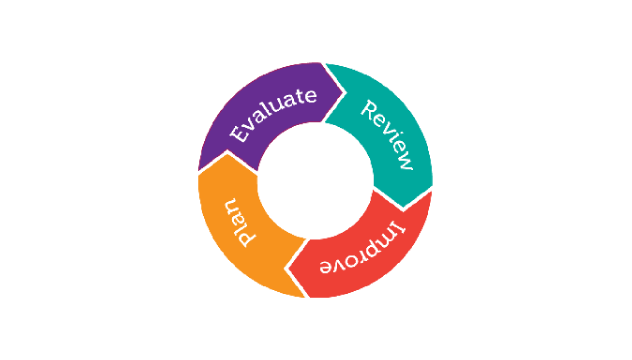
Self-evaluation supports the steps of change (the outer circle), helping services identify what needs to change and plan, test, and implement improvements. The three self-evaluation questions can be used to help services move confidently through these steps. (Healthcare Improvement Scotland, 2026.)
When used well, self-evaluation ensures that children and families have choice and control in their care and the way that their support is provided. This approach reflects the principles of the Health and Social Care Standards:
Dignity and respect
Compassion
Be included
Responsive care and support
Wellbeing
By reflecting on what matters most for children and families, self-evaluation ensures that improvements are meaningful and make a real difference to their lives.
‘Self-evaluation helps us acknowledge the things we do well but also challenge ourselves to consider what we do less well, look more deeply and collaboratively think about how we can make things better for those in our setting.’ (Care Service Manager)
Using the self-evaluation questions
For each focus area, you are encouraged to reflect using the three self-evaluation questions. These questions provide a simple, consistent structure for examining your practice and should be used every time you evaluate an aspect of your service.
Self-evaluation questions
How are we doing?
How do we know?
What are we going to do now?
Using the three questions will help you to:
Evaluate how well your service is performing.
Recognise what is working well and where improvements are needed.
Develop clear and focused plans to take your improvement ideas forward.
Self-evaluation goes beyond quality assurance. It draws on a range of evidence to help you understand the impact of your service, identify priorities for action, and keep people at the centre of ongoing improvement.
Getting ready for self-evaluation
Before planning your self-evaluation activities, it’s important to consider your service’s capacity for improvement. This means thinking about whether you have the resources, skills, time, and stability needed to carry out your self-evaluation activities, make the changes you identify - and sustain them. This includes reflecting on staff skills and confidence, the time available for planning and learning, and any recent or upcoming changes to staffing or structure.
You should also think about how well your team works together to drive improvement and maintain momentum over time. Being realistic about your capacity helps you prioritise actions, identify where support may be needed, and ensure improvements are manageable, achievable, and meaningful.
Strong leadership plays a vital role in creating a culture where self-evaluation can thrive. Leaders should role model reflective practice and empower staff at all levels to be involved in self-evaluation and contribute to the development of the service. It’s important that everyone feels safe to share their views, explore what’s working well, and consider what could be better. Feedback from children and their families should be actively sought and valued.
The Scottish Social Services Council (SSSC) has resources and information to help you develop your leadership skills – Leadership in social services. The Quality improvement framework for the early learning and childcare sectors also includes ‘Leadership’ as a heading. This recognises the important role leaders have in driving improvement through effective quality assurance, including self-evaluation and quality improvement.
Strong leadership is demonstrated when:
Self-evaluation and improvement planning are used to deliver meaningful change.
Feedback and evidence are actively used to inform decisions and shape practice.
Quality assurance activities highlight key strengths and areas for improvement through effective systems
Leaders have the skills and capacity to lead improvement with clarity and maintain momentum over time.
‘Evaluation wants to contribute. Trust them. Leaders are everywhere. Find them. Some people are on a mission. Celebrate them. Others wish things were different. Listen to them. Everybody matters. Show them.’
(Bob Chapman)